POWER TO THE PEOPLE
A SOCIAL READING PROTOCOL
P2P transforms books into social reading objects.
ONE BOOK. TEN CUTS. TEN PEOPLE.
THE REST IS SOCIAL.
DESIGN & FUNCTION
POWER TO THE PEOPLE — A Social Reading Protocol
Concept & Design: Hannes Thorn, THORN STUDIOS.
Initiated through an encounter with Bjarki Ólafsson and his social book-distribution initiative.
POWER TO THE PEOPLE
A SOCIAL READING PROTOCOL
P2P transforms books into social reading objects.
ONE BOOK. TEN CUTS. TEN PEOPLE.
THE REST IS SOCIAL.
01 — THE IDEA
A book is usually given to one person. P2P gives one book to ten.
POWER TO THE PEOPLE is a social reading protocol developed by Hannes Thorn / THORN STUDIOS.
A physical book is divided into ten parts—RIPS. The cuts are intentionally made without regard to chapters, paragraphs or narrative structure. Each RIP is wrapped, numbered from 1 to 10 and given to a different person. A reader may begin in the middle of an argument, encounter the end of a story without knowing its beginning—or discover that a sentence continues in somebody else's hands. If they want more, they have to look for it. They may trade. Wait. Ask. Read another RIP. Pass theirs on. Keep it. Leave it. The fragmentation of the book creates the possibility of connection between its readers. P2P does not prescribe what participants should understand, believe or learn.
The protocol creates the conditions. The people determine what happens.
02 — HOW IT WORKS
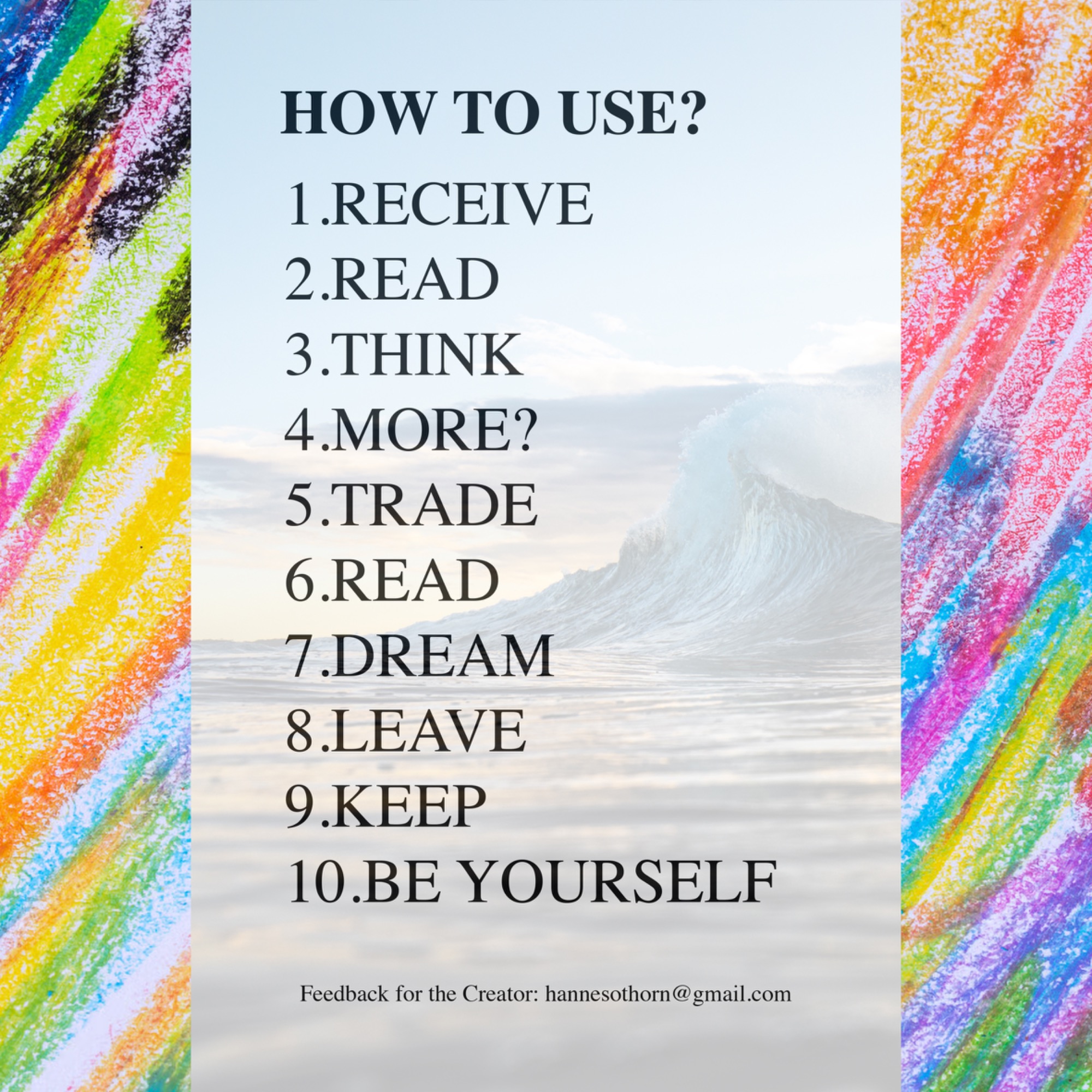
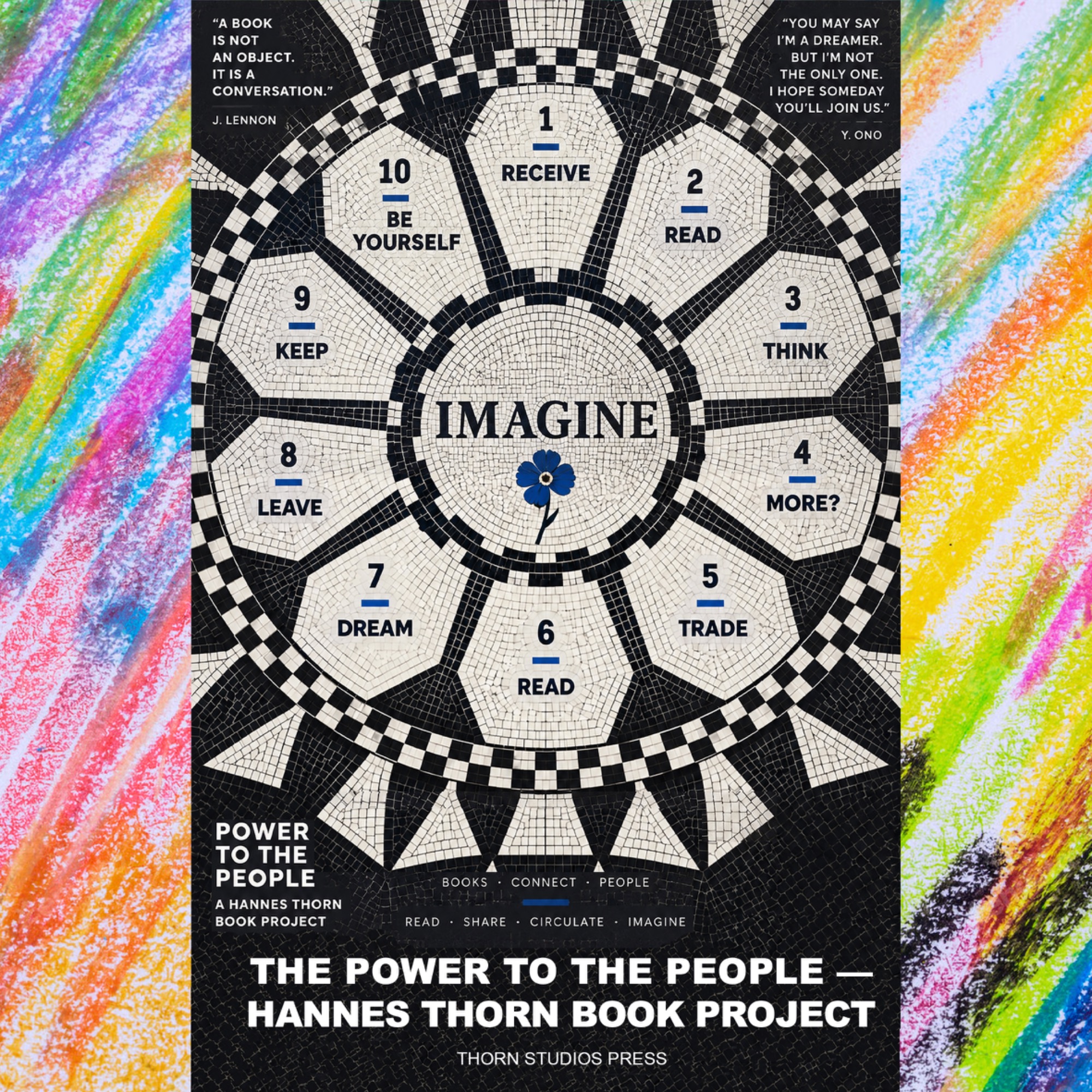
01 RECEIVE: A participant receives one randomly distributed RIP.
02 READ: Start wherever the book happens to start.
03 THINK: The fragment belongs to the reader. So does the response.
04 MORE?: Curiosity activates the social mechanism.
05 TRADE: Another person may hold another part of the book.
06 READ: Continue—elsewhere.
07 DREAM: Reading is allowed to become imagination.
08 LEAVE: Put the RIP back into circulation.
09 KEEP: Or don't.
10 BE YOURSELF: There is no prescribed response.
NO CORRECT ORDER. NO REQUIRED OUTCOME.
03 — THE PROTOCOL
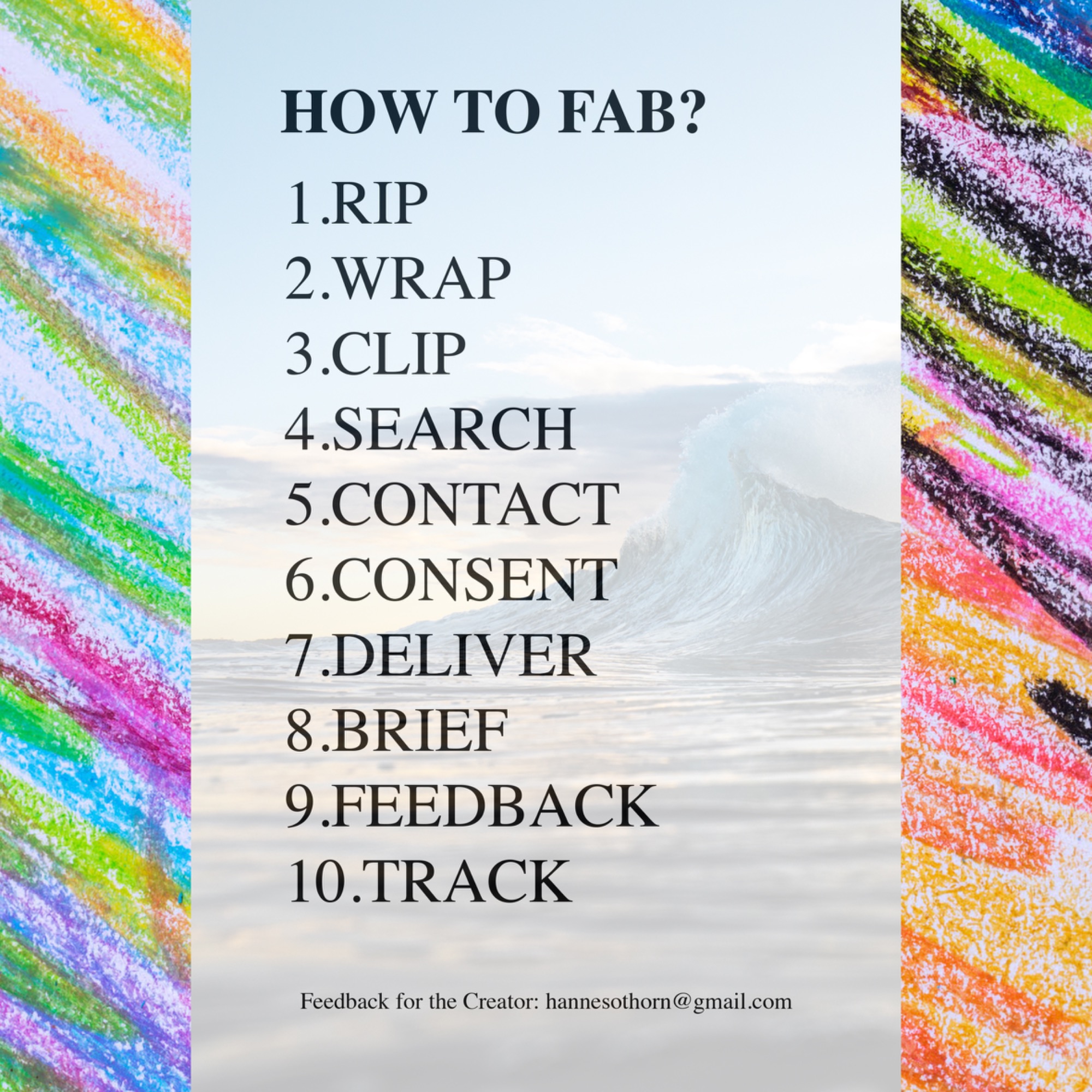
HOW TO FAB?
RIP → WRAP → CLIP → SEARCH → CONTACT → CONSENT → DELIVER → BRIEF → FEEDBACK → TRACK
A host institution and suitable book are identified before deployment. The responsible authority is contacted and the proposed intervention explained. Only after consent is obtained is a set introduced. Participation is voluntary. The intervention is briefly presented, then released from the control of its initiators. After an agreed period, feedback is gathered and the movement and use of the RIPS documented.
04 — THE BOOK IS VARIABLE
THE BOOK IS VARIABLE.
THE PROTOCOL IS CONSTANT.
P2P does not promote a particular author, philosophy, religion or therapeutic method. Books are selected according to context and approved with the participating institution. A novel creates a different social event from an essay. Poetry behaves differently from philosophy. A children's book produces different encounters from a memoir. The book provides the material. P2P provides the mechanism.
A selected list as follows:
- Homer's The Odyssey
- Thor Bjorgolfsson's Billions to Bust and Beyond
- Mark Kriegel's Baddest Man - The Making of Mike Tyson
- Stephen King's The Long Walk
- Malcolm Gladwell's Outliers
- Alcoholics Anonymous' The Big Book
- Narcotics Anonymous' The Basic Text
- Sebastian Junger's Tribe
- Michael Mansfield's The Power in the People
- Or simply your choice!
05 — WHY RIP A BOOK?
Because a complete book is a closed object. A fragment can become a question.
During the first experiment, RIP 1 accidentally ended in the middle of a sentence... RIP 2 began with one word: “silent.”
06 — FIELD APPLICATIONS
P2P CAN BE EXPLORED IN:
Prisons · Hospitals · Mental-health settings · Recovery programs · Schools · Kindergartens · Community centres · Libraries · Shelters · Cultural institutions · Reading groups
P2P is an experimental social-reading intervention, not a therapeutic treatment.
Each deployment is adapted to its host environment. Book selection, participant suitability, safeguarding, consent and documentation are agreed with the responsible institution before implementation.
07 — FIELD TESTS
Intention of growing a research archive.
Example for Date Entry:
P2P / FIELD 001
Location: Reykjavík, Iceland
Host: —
Book: —
10 RIPS / 10 PARTICIPANTS
RIPS exchanged: 6
RIPS still circulating: 3
RIPS lost: 1
Requests for another RIP: 7
Unexpected event: …
Photographs only with appropriate permission.
08 — ORIGIN & CREDIT
POWER TO THE PEOPLE emerged from an encounter between Hannes Thorn and Icelandic artist and voluntary social worker Bjarki Ólafsson, who was exploring ways of distributing books within social institutions. The encounter triggered a different question:
What if, instead of giving ten people ten books, we gave ten people one?
From that question Thorn developed the P2P social reading protocol and its visual and operational system.
POWER TO THE PEOPLE — A Social Reading Protocol
Concept & Design: Hannes Thorn, THORN STUDIOS.
Initiated through an encounter with Bjarki Ólafsson and his social book-distribution initiative.
09 — PARTICIPATE
Three large pathways.